Toyota Prius V
The 2017 Toyota Prius V offers excellent fuel economy and cargo space but is hampered by below-average reliability, primarily due to concerns with its hybrid inverter and airbag system.
Calculated from 10,000+ NHTSA, EPA & owner-complaint data pointsHow we score
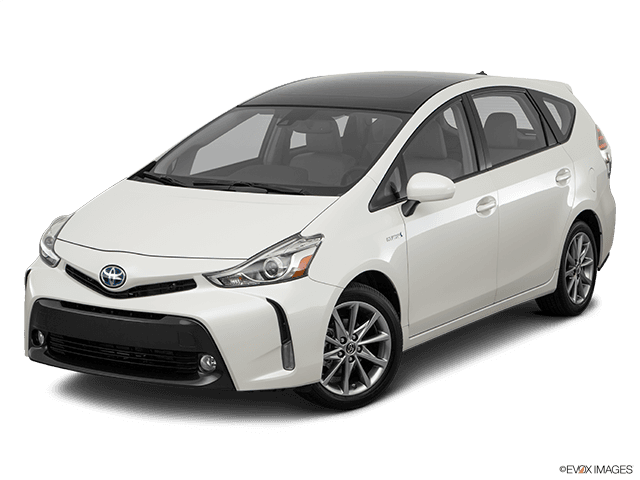 2017 model
Specifications by model year
Compare the stats that matter
Every section below is populated from the available EPA, NHTSA, and vehicle-specification data for this model.
Fuel economy
EPA-rated city, highway, and combined economy by year.
Engine, transmission & drivetrain
Powertrain specifications can vary between model years.
| Year | Body style | Cylinders | Displacement | Fuel type | Transmission | Drivetrain | Horsepower | Torque | Engine configuration |
|---|---|---|---|---|---|---|---|---|---|
| 2017 | wagon | 4 | 1.8 | Regular | Automatic (variable gear ratios) | Front-Wheel Drive | — | — | — |
| 2016 | wagon | 4 | 1.8 | Regular | Automatic (variable gear ratios) | Front-Wheel Drive | — | — | — |
| 2015 | wagon | 4 | 1.8 | Regular | Automatic (variable gear ratios) | Front-Wheel Drive | — | — | — |
| 2014 | wagon | 4 | 1.8 | Regular | Automatic (variable gear ratios) | Front-Wheel Drive | 134 hp | 105 lb-ft | Inline-4 |
| 2013 | wagon | 4 | 1.8 | Regular | Automatic (variable gear ratios) | Front-Wheel Drive | — | — | — |
| 2012 | wagon | 4 | 1.8 | Regular | Automatic (variable gear ratios) | Front-Wheel Drive | — | — | — |
Pricing & configuration
Original pricing and model configuration where available.
Space, dimensions & utility
Seating, cargo, and physical configuration by model year.
| Year | Seats | Doors | Cargo (L) | Cargo (cu ft) | GVWR |
|---|---|---|---|---|---|
| 2017 | 5 | 5 | 971 | 34.3 | Class 1: 6,000 lb or less (2,722 kg or less) | Class 1: 6,000 lb or less (2,722 kg or less) |
| 2016 | 5 | 4 | 1113 | 39.3 | Class 1: 6,000 lb or less (2,722 kg or less) | Class 1: 6,000 lb or less (2,722 kg or less) |
| 2015 | 5 | 4 | 971 | 34.3 | Class 1: 6,000 lb or less (2,722 kg or less) | Class 1: 6,000 lb or less (2,722 kg or less) |
| 2014 | 5 | 4 | — | — | Class 1: 6,000 lb or less (2,722 kg or less) | Class 1: 6,000 lb or less (2,722 kg or less) |
| 2013 | — | — | — | — | Class 1: 6,000 lb or less (2,722 kg or less) | Class 1: 6,000 lb or less (2,722 kg or less) |
| 2012 | — | — | — | — | Class 1: 6,000 lb or less (2,722 kg or less) | Class 1: 6,000 lb or less (2,722 kg or less) |
Safety ratings & driver assistance
NHTSA safety ratings and listed driver-assistance availability.
| Year | Rollover | Rated vehicle | tpms | Overall rating | Frontal crash | Side crash |
|---|---|---|---|---|---|---|
| 2017 | 4 | 2017 Toyota Prius V SW FWD | standard | — | — | — |
| 2016 | 4 | 2016 Toyota Prius V SW FWD | standard | — | — | — |
| 2015 | 4 | 2015 Toyota Prius V SW FWD | standard | — | — | — |
| 2014 | 4 | 2014 Toyota Prius V SW FWD | standard | 5 | 4 | 5 |
| 2013 | 4 | 2013 Toyota Prius V SW FWD | standard | 5 | 4 | 5 |
| 2012 | — | 2012 Toyota Prius V SW FWD | standard | — | — | — |
Model year reports
2017
NewestThe 2017 Toyota Prius V offers excellent fuel economy and cargo space but is hampered by below-average reliability, primarily due to concerns with its hybrid inverter and airbag system.
2016
The 2016 Toyota Prius V presents a mixed bag for used car buyers, with its strong fuel economy and practicality offset by significant reliability and safety concerns.
2015
The 2015 Toyota Prius V presents a mixed bag for used car shoppers, with its strong fuel economy and practicality offset by significant concerns regarding its braking system and hybrid powertrain reliability.
2014
The 2014 Toyota Prius V is a practical hybrid with excellent fuel economy, but its below-average reliability verdict, driven by significant **service brake** concerns, makes it a cautious used purchase.
2013
The 2013 Toyota Prius V is a high-risk used purchase due to significant and recurring **service brake** failures.
2012
The 2012 Toyota Prius V is generally considered below average for reliability, with significant and persistent issues in the service brakes system being the primary ownership concern.
Scores are derived from NHTSA recalls and owner complaints, normalized by vehicle segment averages.
What are the best years for the Toyota Prius V?
Carfocal currently has 6 published Prius V reports, covering 2012 through 2017. Compare the year-specific reports directly to see how reliability, recalls, ownership costs, and value change over time. The newest published verdict says: The 2017 Toyota Prius V offers excellent fuel economy and cargo space but is hampered by below-average reliability, primarily due to concerns with its hybrid inverter and airbag system.
Published year coverage: 2012, 2013, 2014, 2015, 2016, 2017.
Is the Toyota Prius V reliable?
There is no single reliability answer for every Toyota Prius V. Carfocal's published year reports show why the model year matters, with verdicts that include the 2017 toyota prius v offers excellent fuel economy and cargo space but is hampered by below-average reliability, primarily due to concerns with its hybrid inverter and airbag system. and the 2017 toyota prius v offers value through its exceptional fuel economy and generous cargo space. Compare the report for the year you are considering before you make a decision.
6 published year-specific reports are available for comparison.
What are common problems with the Toyota Prius V?
Across Carfocal's published Prius V guides, recurring problem areas include Hybrid Inverter, Headlight/DRL Bulbs, and Rear Hatch Struts. The exact risk depends on the model year, so open the report for the vehicle you are evaluating to see which issues, recalls, and repair concerns apply.
Common problem areas found in published repair predictions: Hybrid Inverter, Headlight/DRL Bulbs, and Rear Hatch Struts.
Supporting data
- Published guides
- 6
- Years tracked
- 6
- Data sources
- NHTSA, EPA, owner complaints