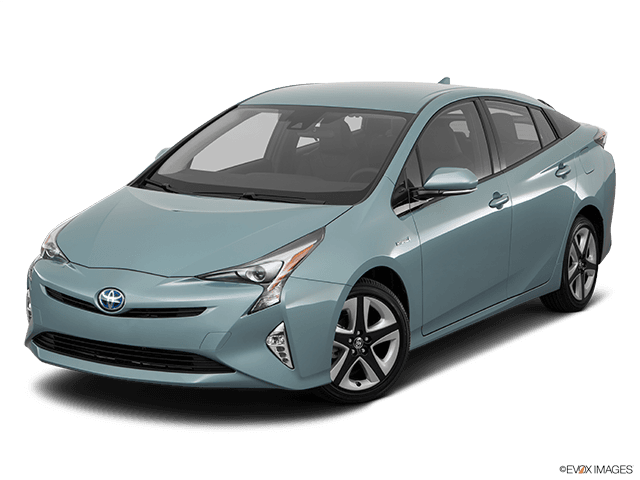
2017 Toyota Prius Report
Known issues, recalls, running costs, and what to check before you buy.
Overall Score
Key Takeaways
- Exceptional fuel economy (52 MPG combined) remains a primary draw.
- Significant concerns exist regarding service brakes and vehicle speed control, posing potential safety risks.
- The windshield is a known weak point, with numerous reports of spontaneous cracking.
- Three recalls were issued, including critical ones for the parking brake and wiring harness.
2017 Toyota Prius
The 2017 Toyota Prius is a fuel-efficient hybrid known for its impressive MPG. However, used car shoppers should be aware of its 'Below Average' reliability verdict. Critical issues include documented problems with service brakes and vehicle speed control, alongside frequent reports of windshield cracking. Three recalls were issued, impacting the parking brake and wiring harness. While it boasts a 5-star overall NHTSA safety rating, these specific concerns require thorough inspection.
Critical Failure Risk
The windshield is prone to cracking, often spontaneously or with minor impacts, suggesting potential material or design fragility. This can compromise visibility and structural integrity.
Early detection can help you avoid a $295-$3,500 repair.
Safety & Bulletins
Owner Complaints
Performance & Efficiency
- Horsepower
- 121HP
- Torque
- 105 lb–ftLB-FT
Reliability
Practicality
The score is supported by solid day-to-day usability signals.
Who This Car Is For
Best for
Hypermilers and budget-conscious commuters prioritizing fuel economy above all else.
+2 more buyer-fit notes in the full report
Avoid if
Drivers prioritizing absolute reliability and minimal unexpected repairs.
+2 more buyer-fit warnings in the full report
2017 Toyota Prius Reliability Analysis
Explore comprehensive reliability data including official safety recalls, consumer complaints, and common mechanical failures for the 2017 Toyota Prius.
Vehicle Specs
- Fuel Type
- Regular
- Seating Capacity
- 5
- Horsepower
- 121 hp
- Torque
- 105 lb-ft
- Transmission
- Continuously Variable Transmission (CVT)
- Drivetrain
- FWD/Front-Wheel Drive
- Body Style
- Hatchback
- MSRP Range
- $23,475 - $30,015
- EPA Combined MPG
- 52
CarFocal account required
See the full 2017 Toyota Prius buyer report before you decide
Most Common Issues
1. Visibility
Most reportedUsage: 17 reports
2. Braking System
Usage: 14 reports
First Service Interval
- Tire Rotation and Multi-Point Inspection
Est. shop cost: $75 - $150
Unlock the full maintenance guide for every scheduled service interval and cost forecast.
Free • Takes 20 seconds • Saves Thousands $
Already have an account? Log in
FAQ
Is the 2017 Toyota Prius reliable?
The CarFocal Reliability Score for the 2017 Toyota Prius is 8.4/10. Reliability score is 8.4/10. NHTSA recalls: 3. Owner complaints: 125.
How practical is the 2017 Toyota Prius for daily use?
Practicality score is 8.3/10. The score is supported by solid day-to-day usability signals. EPA combined economy is 52 MPG. Seating capacity is 5. 5 passenger doors are listed. Boot capacity is 457 litres.
What is the overall score for the 2017 Toyota Prius?
The CarFocal Overall Score for the 2017 Toyota Prius is 7.4/10. Overall score is 7.4/10 (Good). Confidence 85%. Maintenance 7.6/10. Tuning 2.0/10. Practicality 8.3/10.
What does it cost to own and maintain a 2017 Toyota Prius?
Based on Carfocal's data, First listed service: - Tire Rotation and Multi-Point Inspection at 5,000 miles. Estimated first-year maintenance: $1,000 - $1,500. Repair prediction highlight: Windshield (typical at 50,000 miles, estimated cost Min: $169 • Max: $1,500).
What is the MSRP range for the 2017 Toyota Prius?
MSRP range is $23,475 - $30,015.
What engine is in the 2017 Toyota Prius?
Engine specs list Inline-4 • 4 • 1.8. Output is 121 hp • 105 lb-ft.
What transmission does the 2017 Toyota Prius use?
According to CarFocal's specs for the 2017 Toyota Prius, transmission is Continuously Variable Transmission (CVT). The paired drivetrain is FWD/Front-Wheel Drive.
What is the combined EPA MPG for the 2017 Toyota Prius?
EPA combined estimate is 52 MPG.
What kind of powertrain does the 2017 Toyota Prius use?
Powertrain classification is Battery Electric (BEV). Drive unit is Dual Motor.
What driver assistance and safety features are available on the 2017 Toyota Prius?
13 standard driver assistance features. Key features include Anti-lock Braking System, Electronic Stability Control, Traction Control.
What is the fuel economy range for the 2017 Toyota Prius?
According to CarFocal's specs for the 2017 Toyota Prius, fuel economy range is 52-56 mpg combined.
How many people fit in a 2017 Toyota Prius?
According to CarFocal's specs for the 2017 Toyota Prius, seating capacity is 5.
What body style is the 2017 Toyota Prius?
According to CarFocal's specs for the 2017 Toyota Prius, body style is hatchback.
What drivetrain does the 2017 Toyota Prius use?
According to CarFocal's specs for the 2017 Toyota Prius, drivetrain is FWD/Front-Wheel Drive. Transmission is Continuously Variable Transmission (CVT).
What are the NHTSA safety ratings for the 2017 Toyota Prius?
NHTSA ratings: Overall 5/5 • Frontal 4/5 • Side 5/5 • Rollover 4/5.
Is the 2017 Toyota Prius good for tuning?
Tuning potential is rated 2/10. The 2017 Toyota Prius is a hybrid vehicle prioritizing fuel efficiency, offering minimal traditional performance tuning capabilities.
Should I tune the 2017 Toyota Prius?
The Toyota Prius is a hybrid vehicle with a focus on fuel efficiency rather than performance. Its powertrain is not designed for significant aftermarket tuning, and there is limited support for engine modifications aimed at increasing horsepower. While suspension and aesthetic modifications are possible, the core engine tunability is very low.
What are the most common visibility/wiper problems on the 2017 Toyota Prius?
Top complaint category: visibility/wiper (17 reports, 13.6% of complaints).
Are there open safety recalls on the 2017 Toyota Prius?
This model year has 3 official safety campaigns listed.
Should buyers consider alternatives to the 2017 Toyota Prius?
Alternatives listed in this guide: 2017 Hyundai Ioniq and 2017 Chevrolet Bolt EV.